
How 'easy' routes can improve your climbing
Recently a topic has come up with clients and that is the power and value of doing ‘easy’ routes (easy is a relative term for everyone obviously, still I mean way easier than you think). It’s not that people aren’t on board with warm ups, far from it. It’s also not that people describe easy routes as boring. It’s more the mentality of what a volume of easy (or should I say easier or sub-max) routes can actually do for your climbing. Current popular psychology is pretty obsessed with the ‘magic’ of getting out of your comfort zone. However from my experience working with people, this zone is also misunderstood and highly precarious. There are many gains to staying within your comfort zone.
Easy routes help us warm up, yes, but also crucially a managed volume of easier climbs can also reap huge benefits far beyond serving as warm ups, especially when it comes to the psychological. I want to talk about the concept of what a client recently described as ‘managed mileage’. As the saying goes, it’s not what you do but the way that you do it.
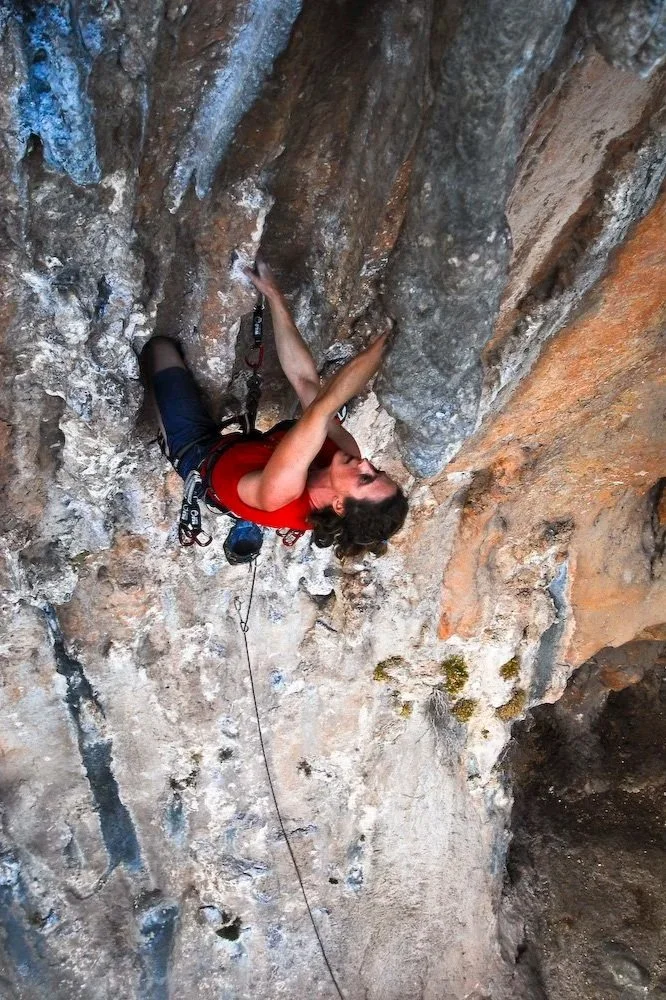
Me climbing Saxafon 6b+ Geyikbayiri Turkey. There is huge value in easier mileage on a variety of styles if your aim is to improve your onsight skills.
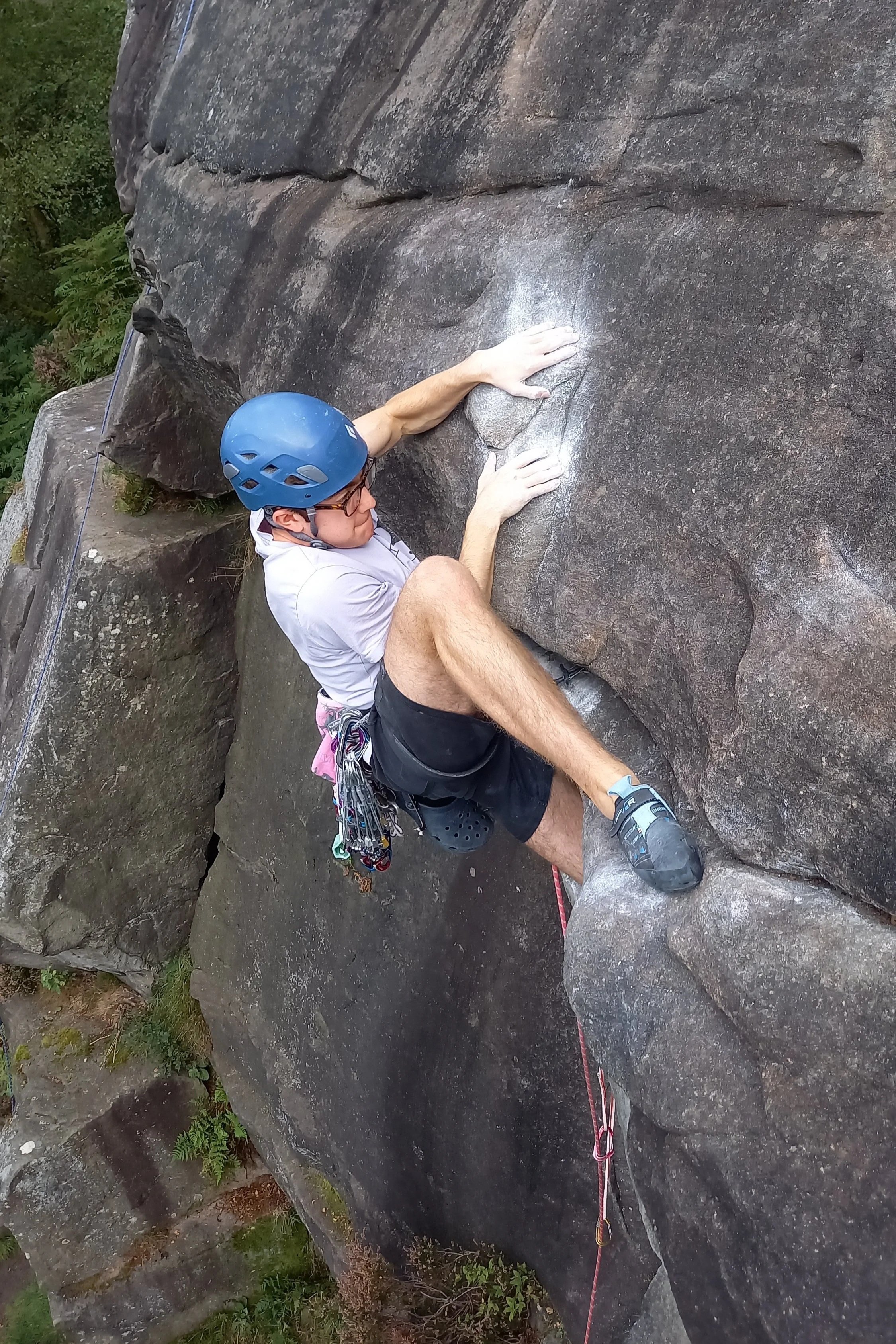
Finn climbing Tody’s Wall HVS Froggatt. Trad really requires time putting in the volume to refine the complex skills required to get your head in gear.
“I really enjoy warming up on 6as” Adam Ondra from the UKClimbing interview (at 30 minutes) - and as he describes to the surprise of other elite climbers. Proof I’m not the only one who thinks the same. I’m with you Adam.
The following reasons can apply to a warm up, but they can also apply to a longer period of climbing. Managed mileage is helpful at the beginning of the outdoor climbing season (after an extended period climbing indoors), during the early part of a climbing trip and also after a break. It can also be useful mid-season on the first day of short 2-3 day climbing trips, especially if you are climbing infrequently outside.
Managed mileage gives a feeling of flow and sense of movement. It’s good to find something easy. It’s good to be able to spot hands and feet quickly and confidently without hesitation and also climb without excess tension in the body. If you’ve been climbing a lot at the climbing wall and haven’t spent much time on rock recently, easy mileage will tune you into where your eyes need to go in order to find hands and feet quickly. If you’re new to a certain rock type, again a volume of easier routes will enable you to tune into the friction or the way the sun may cast shadows and suggests a possible handhold.
Easy warm ups enable you to check in with how you’re feeling. If we have a set warm up that we stick to rigidly it doesn’t allow us to check in with ourselves – perhaps if we’re tired it doesn’t mean we need to write the day off, it may just mean we need a longer warm up. If we’re stressed from work, a longer warm up that allows us to check in with our breath may enable us to regulate and then get the best out of ourselves. Weekend warriors may need the Saturday to move, de-stress from the week’s work and then Sunday is the day to go for it.
It’s important to build familiarity with feeling good. If you experience stress or fear in your climbing, it’s not just about fire-fighting when it feels difficult. Being constantly out of your comfort zone is tiring and the outcomes are not always guaranteed or positive. Spending a solid proportion of your climbing session feeling good and positive connects you back to why you enjoy climbing. It also leaves space in your brain to push harder when it matters, in smaller doses, in a much more deliberate way.
Easy routes build confidence with the hard skills like placing gear or clipping positions. If you haven’t climbed much trad outside recently it may take quite a few times to get the right cam or wire placed. Lots of easier routes will speed up your ability to select and place the right gear, freeing up brain space to get on with the climbing.
We can practise technique and efficiency on easier routes. Footwork and specific techniques like jamming or knee bars can all be practised on easier routes. Yes bouldering may offer an option here, but there is no substitute for easier and mid grade routes when it comes to efficiency: conserving energy, putting optimum force through handholds, reading sequences quickly and pacing.
Varying your intensity avoids injury. Constantly climbing at a high intensity and at your limit puts you at risk of injury. Easier routes at the appropriate intensity are useful for endurance training, warm downs (to flush out toxins from the blood) and active rest days all of which can all be done outside - which feed into points 1-5.
And then, when we’ve put in the time, the next grade up simply feels like a natural step. Time and time again I see a considered, well constructed warm up on easier (than you think) routes is the short cut to a higher performance. It may be counter intuitive to go easier rather than harder initially, but I can guarantee your mind and body will gladly respond and thank you. And if there isn’t a warm up at the crag? What about visiting another sector first, traversing at the bottom of the crag, climbing up the easier, lower part of a harder climb (possible on sport routes) or repeating a route you’’ve done before.
Whether you are a sport climber or trad climber, what does managed mileage mean to you? Which of the points above resonate with you? How do you structure your warm up? Do you tune into getting the challenge right, building up carefully or is more a case of a quick warm up and onto the aim for the day – how does that work for you? If you live far away from climbing do you have a tendency to jump in quite quickly onto routes close to your limit or spend a day getting going on easier routes?
Perhaps you feel you are already doing managed mileage, however are you conscious of what each of those routes can give you, the intention behind each route? Is it a case of simply doing the routes, rather than practising a specific exercise or outcome? The key word here is ‘managed’ and not just mileage.